Who we are
3 Interwoven Stories
On this land, histories of freedom-making, music, and extraction converge. We interpret three interwoven stories: the 1811 German Coast Uprising, the world-changing legacy of jazz pioneer Kid Ory, and the long arc from plantation economies to today’s petrochemical corridor.
As one of the public-facing cultural heritage spaces of the organization, we make visible the work of preservation, advocacy, and community care that The Descendants Project advances across the region.
We are committed to public learning that is honest, grounded, and welcoming. Through exhibitions, research, and programs on the grounds, we invite visitors to encounter the past as something both alive and future-facing – creating and shaping community, ecology, and possibility in the present.
1811 German Coast Uprising
The rebellion endures as a blueprint of collective courage
On January 8–10, 1811, enslaved Africans and African Americans along Louisiana’s German Coast (today’s St. John the Baptist, St. Charles, and Jefferson Parishes) launched what many historians describe as the largest uprising of enslaved people in U.S. history.
The revolt ignited on Woodland’s site, then known as Manuel Andry’s plantation. It was led by Charles Deslondes, an enslaved man who organized with others across plantations, taking advantage of a moment when the intense pace of sugar production had eased.
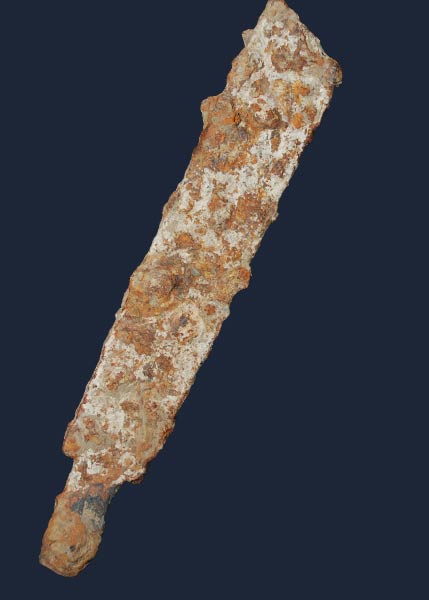
Over the next two days, a procession of freedom-seekers moved down River Road toward New Orleans, gathering people as they marched. Estimates range from over 200 to as many as 500 participants. Many carried cane knives, clubs, and farm tools, and they burned multiple plantations and sugarhouses along the way.
The uprising was met with overwhelming force. Local militias and U.S. troops crushed the march, killing many in battle and then hunting others down. In the aftermath, tribunals convened and dozens were executed. Heads were displayed along the river road as a warning, a terror intended to silence memory.
And yet the rebellion endures as a blueprint of collective courage – planned, coordinated, and future-facing. It reminds us that the people enslaved here were not passive victims of history. They were organizers, strategists, and revolutionaries who demanded freedom and who sacrificed their bodies and their lives for it.
The 1811 Rebellion reminds us that liberation is not an abstract idea. It is made through collective action, risk, and vision. Here, we honor those who rose up, and we listen for what their footsteps still ask of us: to remember truthfully, to name violence without flinching, and to imagine new futures with discipline and care.
As you enter this site, we invite you to witness more than a past event. You are stepping onto ground shaped by resistance. May this history strengthen you and may it widen what you believe is possible.
Caption
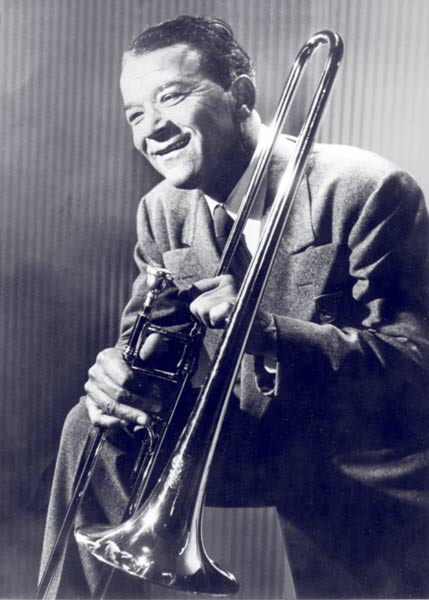
The Legacy of Kid Ory
Edward “Kid” Ory was a revolutionary in the oldest sense: he made a way out of no way. And because Black brilliance disrupts what power wants to keep orderly, the world has always tried to praise it with conditions—then, and now.
Born December 25, 1886 in LaPlace, Louisiana, Ory’s music carries the force of a people who refuse to disappear. His trombone didn’t just entertain. It announced presence. It made space. It bent sound into a kind of freedom practice by turning breath into architecture, rhythm into route, and a chorus into a gathering where survival could become art.
At the Woodland Plantation Museum, we hold Kid Ory’s legacy alongside the 1811 German Coast Uprising and the long, ongoing story of extraction and displacement that followed from plantation to petrochemical corridor. These are not separate narratives. They are braided. The same ground that remembers forced labor and organized resistance also remembers the brilliance that rose anyway, the brilliance that kept people alive in body and spirit, and through unbearable conditions.
We call this traumatic brilliance. We say this not as a romanticizing of pain, but as a precise naming of what Black communities have made in the aftermath of violence. Kid Ory’s sound is part of that lineage. It is what happens when a homeplace, no matter how violent, still generates new worlds.
To step onto this site is to step into a living archive. Here, “home” is not a simple word. Home can be tender and terrifying. Home can hold grief and groove in the same breath. And still, we gather, because gathering is how we reclaim the right to feel, to move, and to imagine.
We invite you to come listen closely. Not only to the music, but to what the land has been trying to say all along: that freedom is not just an event. It is a practice. It is a rhythm. It is a return, It is a refusal. And it is a resistance.
Plantation-to-Pollution
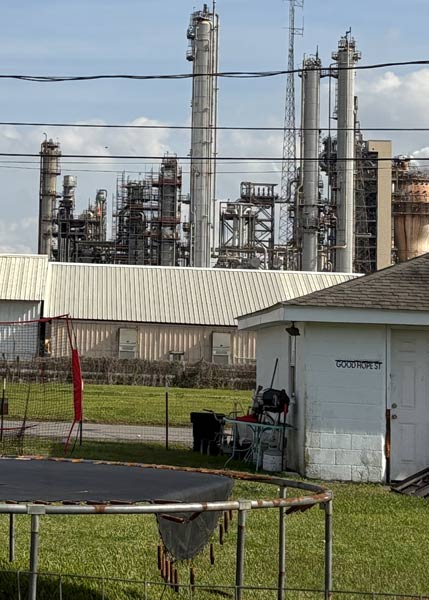
Woodland sits on ground that has been asked, again and again, to carry someone else’s profit. It sits on land shaped by a long arc of extraction.
This land once held the violence and forced labor that built plantation wealth. And when the plantation system “ended,” its logics did not. They retooled. They moved through paperwork, property lines, and zoning maps. They hardened into new infrastructures such as rail spurs, tank farms, smokestacks, canals cut and widened, fences that redraw who belongs where —until the region became what many now call “Cancer Alley,” where pollution saturates the air, water, and soil around communities that have been rooted here for generations.
The same corridor that extracted Black life through bondage now extracts breath, health, and futures through pollution.
We name this plainly: the plantation did not disappear. It became a pipeline.
But Woodland is not a monument to harm. It is a living site of refusal, an insistence that the ground can be held differently. Here, the museum and its grounds are not just a backdrop for history; they are a practice of repair and re-imagination. When we walk this land, tend it, study it, and gather on it, we are re-coding what this place is for. We are listening for what was suppressed and making room for what is still here: memory, music, uprising, kinship, and the knowledge carried in bodies and soil.
To tell the story of plantation-to-pollution is to tell the truth about continuity and to claim the right to interruption. We invite you to step onto these grounds with us: to learn, to witness, to breathe together, and to imagine what it would mean for this land to serve life instead of extraction. This is why our work is both truth-telling and future-building. We honor the people who resisted the plantation’s order, and we recognize the contemporary fight for land, health, and dignity as part of the same continuum. At Woodland, history is not past. It is a terrain we move through so we can change how we move forward.
We aim to…
Deepen public understanding of these 3 interwoven stories and its ongoing impact.