Photo Descriptions and Credits
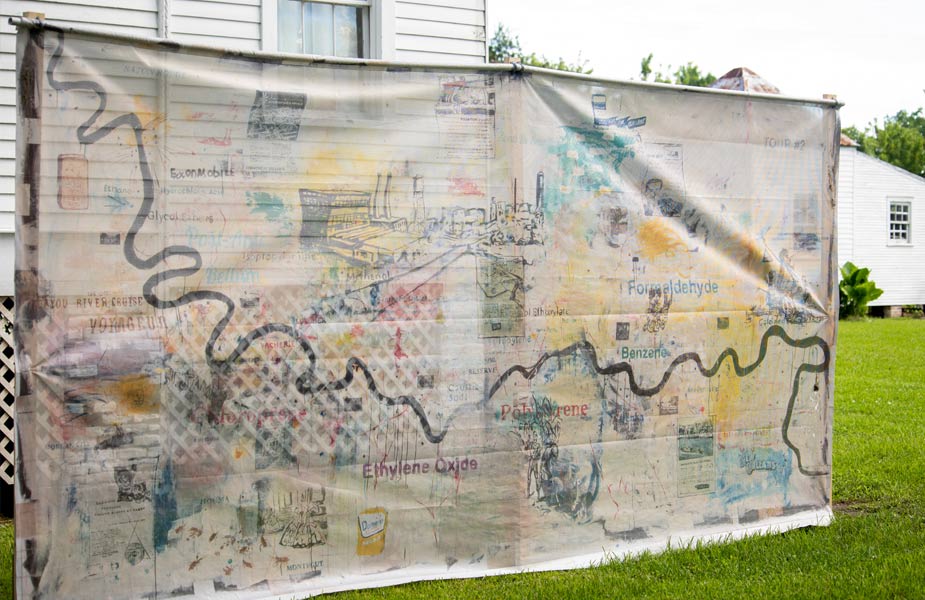
- Tour #2(Sacrifice Zone), 2022, acrylic, ink and collage on canvas paper output on vinyl banner, 100 x 218 inches by Juan Carlos Quintana; on display for 2025 Julyteenth Programming.
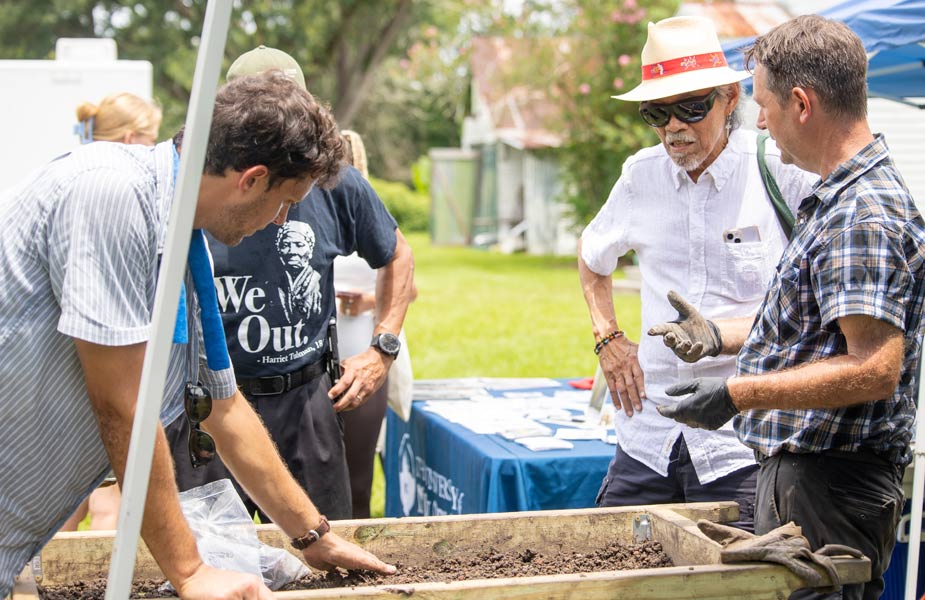
Tour #2 was originally exhibited in a group exhibition, Plastic: The New Coal, presented by The Descendants Project from March 23 to April 15, 2025. The exhibition, curated by Monique Verdin and Patricia Watts, features artists from New Orleans and Mandeville confronting the global truths and local challenges of plastic production, particularly along the final leg of the Mississippi River, where petrochemical facilities dominate the landscape. Since this exhibition, Quintana has donated the work to The Descendants Project, where it is currently in stewardship at the Woodland Plantation Museum. - Woodland Advisory Board Member, LSU: New Orleans Richard Wallin Boebel Professor of Anthropology and Associate Director of Midlo Center for New Orleans Studies, Dr. Ryan Gray (on far right), showcasing found artifacts from campus archeological digs to community members during the 2025 Julyteenth program. Community Archeology days will be a part of Woodland’s forthcoming educational programming.
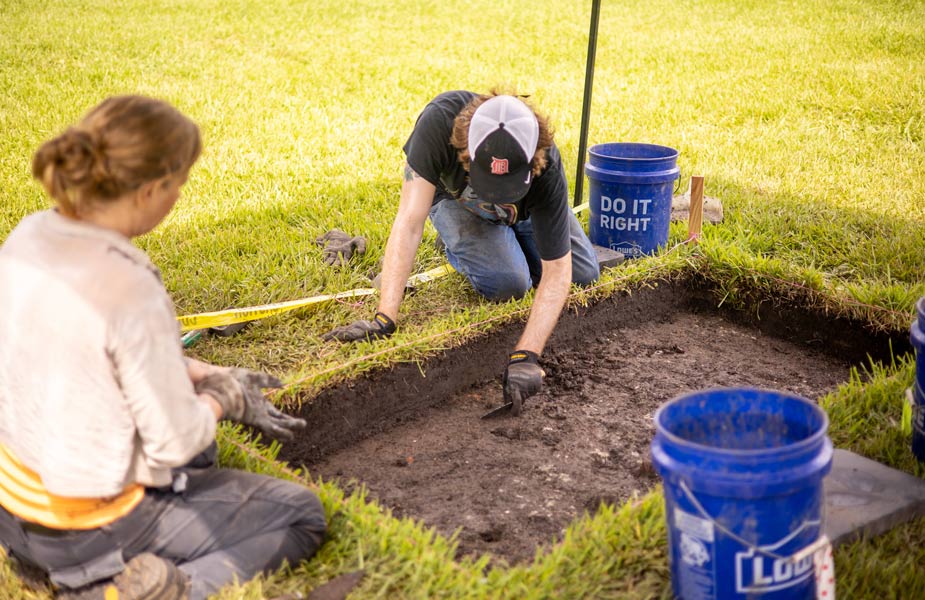
- UNO Archeology students performing archeological digs on Woodland grounds during the 2025 Julyteenth program. Community Archeology days will be a part of Woodland’s forthcoming educational programming.
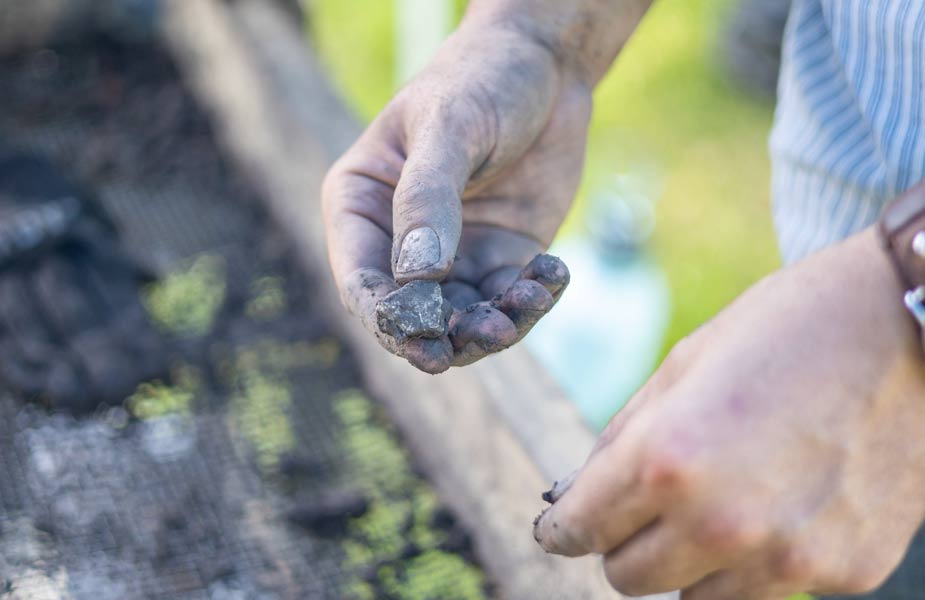
Close-up image of an object found during archaeological digs on Woodland’s grounds during the 2025 Julyteenth program. Community Archeology days will be a part of Woodland’s forthcoming educational programming. - Close up of Brickler Artifacts on view at the Woodland Plantation Museum. The Brickler Family are descendants of Harriet Tubman and have collected artifacts reflective of Black resistance to enslavement. The Descendant’s Project and Woodland Plantation Museum displayed these objects in tandem with our annual Julyteenth program, commemorating the emancipation of enslaved people in St. John the Baptist Parish.
Pictured in this image are the artifacts: a saber, crochet doily, pistol, and newspaper clipping from the family’s collection.
This saber once belonged to Henry Lucas, a young man born into slavery who escaped during the Civil War. Henry Lucas, the husband of Margaret Stewart, allegedly retrieved the weapon from the body of a Confederate soldier during his flight north. The sword, now preserved by the Brickler family, stands as a powerful symbol of resistance, survival, and the fight for freedom.
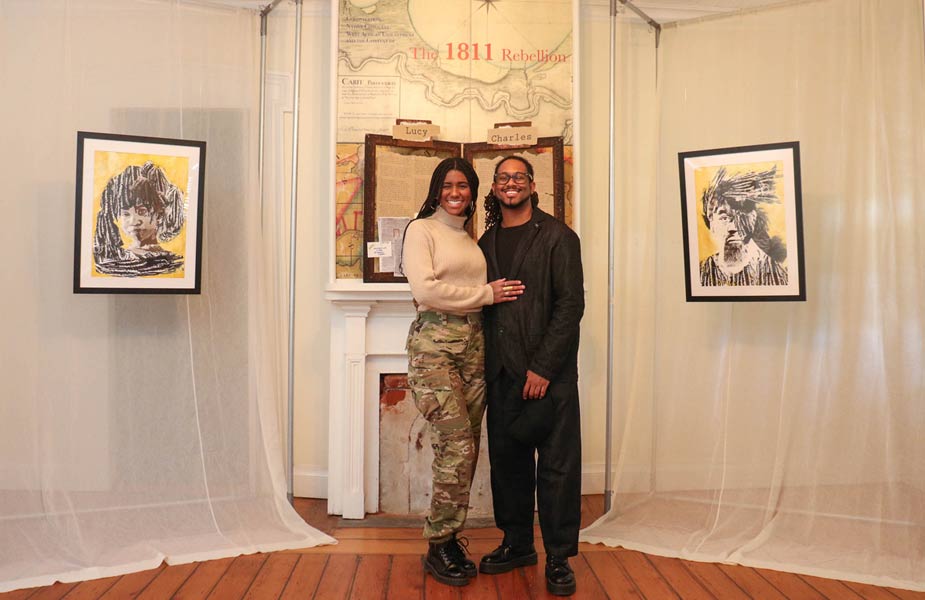
The pistol and doily within the display case are items alleged to have been used by Harriet Tubman by her descendants, the Brickler family. In 1862, Harriet liberated her niece, Margaret Stewart, the matriarch of the Brickler family. Margaret recited stories to her daughter and grandchildren about “Aunt Harriet” and the experiences of her life in slavery and liberation. In the exhibited newspaper clipping, Alice Brickler, daughter of Margaret Stewart and great-niece of Harriet Tubman, recalls her memories of “Aunt Harriet” as a child. - John Alleyne (right) pictured with works, Lucy, 2019, Silkscreen-monotype and acrylic ink on Arches 88 paper framed, 30 in x 24 in (left) and Charles, 2019, Silkscreen-monotype and acrylic ink on Arches 88 paper framed, 30 in x 24 in (right); January 2025.
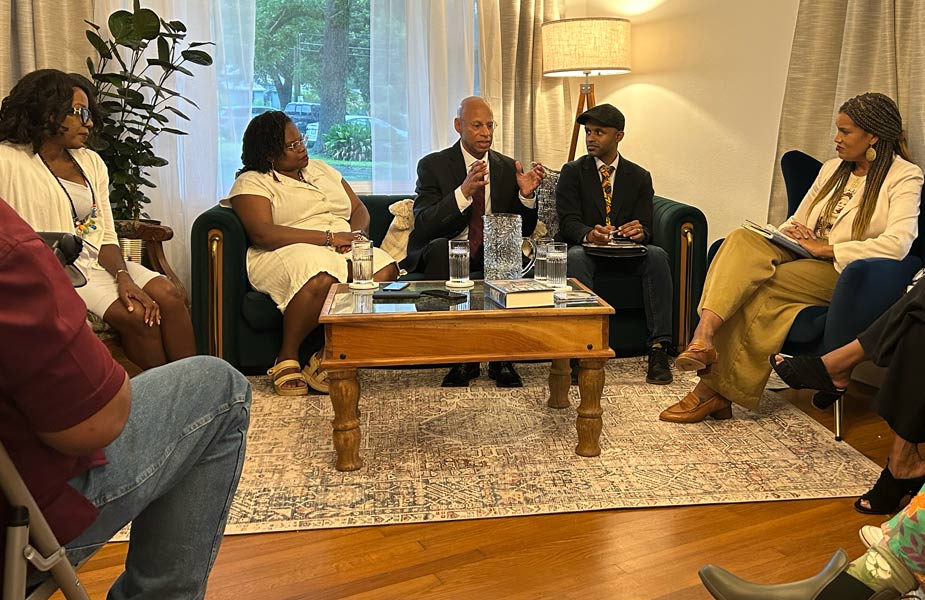
Lucy, an enslaved woman from Antoine Philippon’s plantation, allegedly held a key role in the German Coast Uprising, along with Charles Deslondes, who led the resistance toward New Orleans on January 10, 1811. For the 2025 commemoration of the uprising, The Descendants Project commissioned Alleyne to reimagine Lucy and Charles through the portraits of current Black grassroots organization members, linking resistance and revolution through time. - Image of the “The Stories We Carry: Harriet Tubman’s Legacy of Liberation” panel discussion. Pictured from left to right are featured panelists, Dr. Edda L. Fields-Black, author of COMBEE: Harriet Tubman, the Combahee River Raid, and Black Freedom during the Civil War; Amber N. Mitchell, Curator of Black History at the Henry Ford Museum;Dr. Alex Brickler and Dr. AJ Brickler of the Brickler Family, descendants of Harriet Tubman; Dr. Joy Banner, co-founder and co-director of the Descendants Project; and Sultana Harris, Interim Executive Director of Woodland Plantation Museum. Moderated by Dr. Banner and Harris, this conversation considers the legacy of Harriet Tubman’s military career and examines the complex ways provenance, care, storytelling, and identity intersect across disciplines, particularly within sites and histories shaped by trauma.
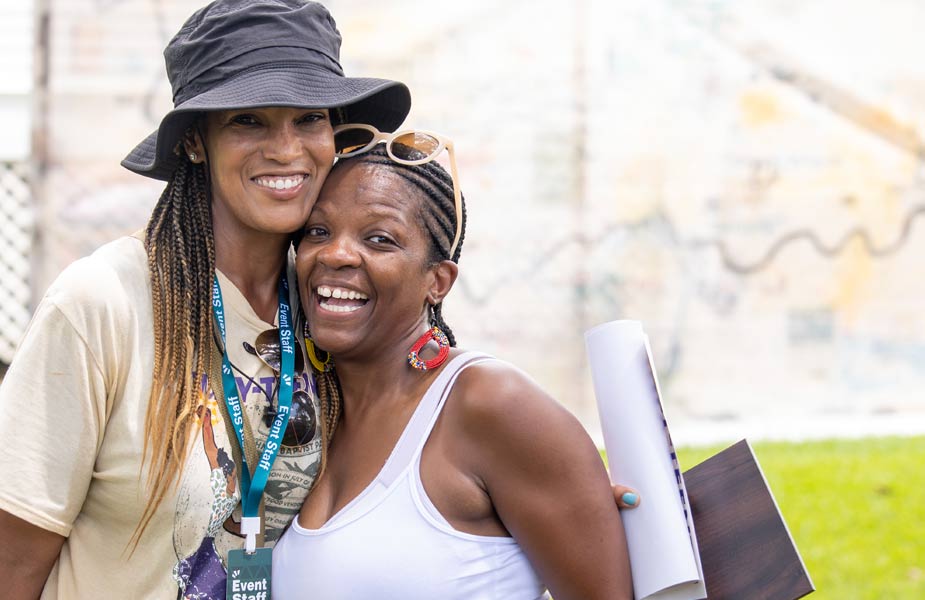
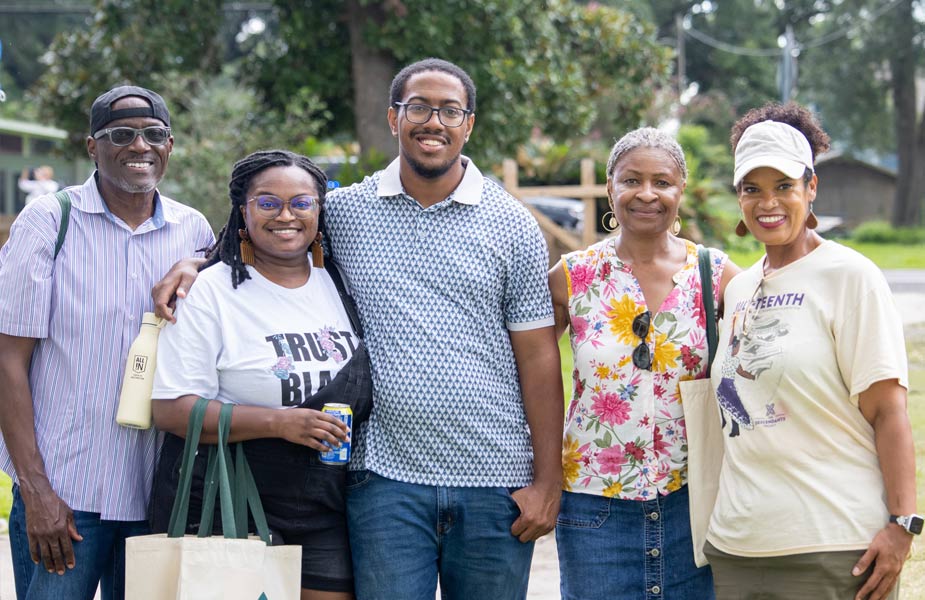
- Co-founder and Co-Director of The Descendants Project, Dr. Joy Banner (left) and community member pictured at our 2025 Julyteenth program.
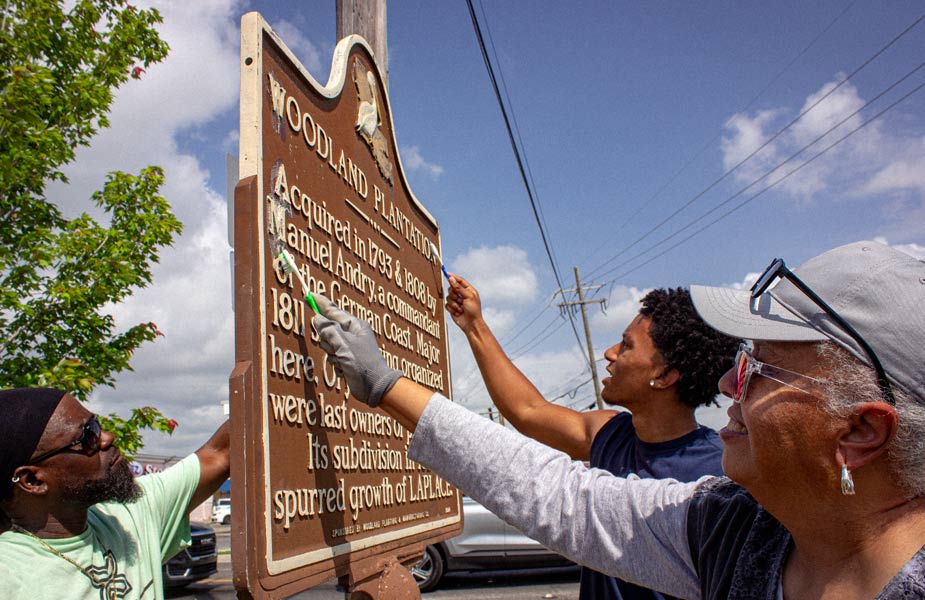
- Community clean of Woodland Plantation’s historic marker for National Historic Marker Day; April 2025.
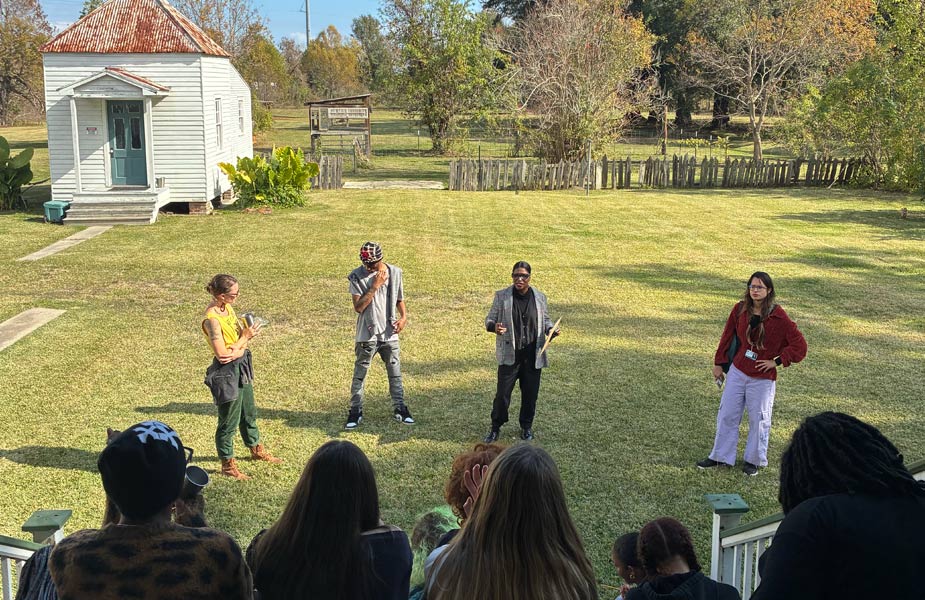
Woodland Plantation was awarded a historic marker due to its significance as the site of the 1811 German Coast Uprising, arguably the largest enslaved uprising in American history, and as the birthplace of Edward “Kid” Ory, a Creole jazz trombonist who helped shape the New Orleans jazz scene. - Field trip with New Harmony High School juniors and seniors; December 2025. We led students on a psychogeographic walk, an exploratory and grounding somatic exercise, and a historic tour of the house, sharing our three programmatic and exhibition themes: the Plantation-to-Petrochemical Corridor, the 1811 German Coast Uprising, and the legacy of Creole jazz trombonist, Edward “Kid” Ory.
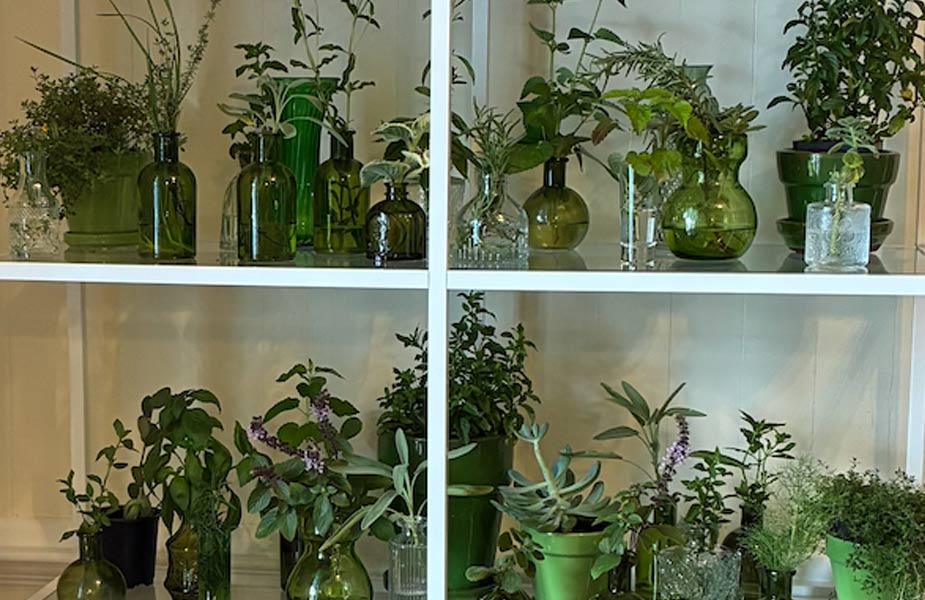
- Native Plant Wall installation at Woodland Plantation Museum featuring snips of Cuban oregano, Tokyo Bunching Onions, Rosemary, Sage, and more. This installation functions as an interactive, sensory experience for visitors who are invited to touch and smell the plants to ground themselves in their body.
- Community members and Jo Banner (right) pictured at our 2025 Julyteenth program
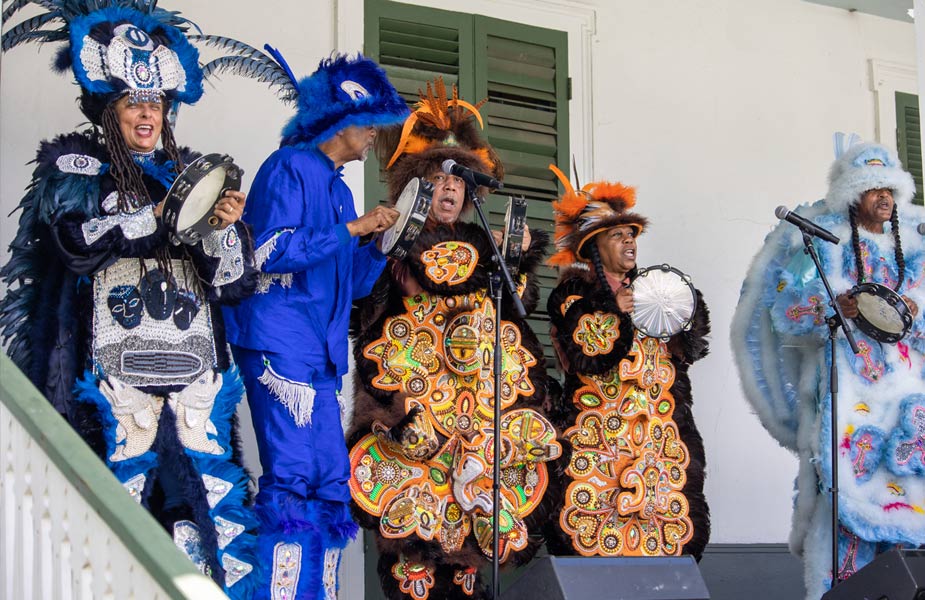
- Yellow Pocahontas Black Masking Indians performing at The Descendant’s Project 2025 Julyteenth Program
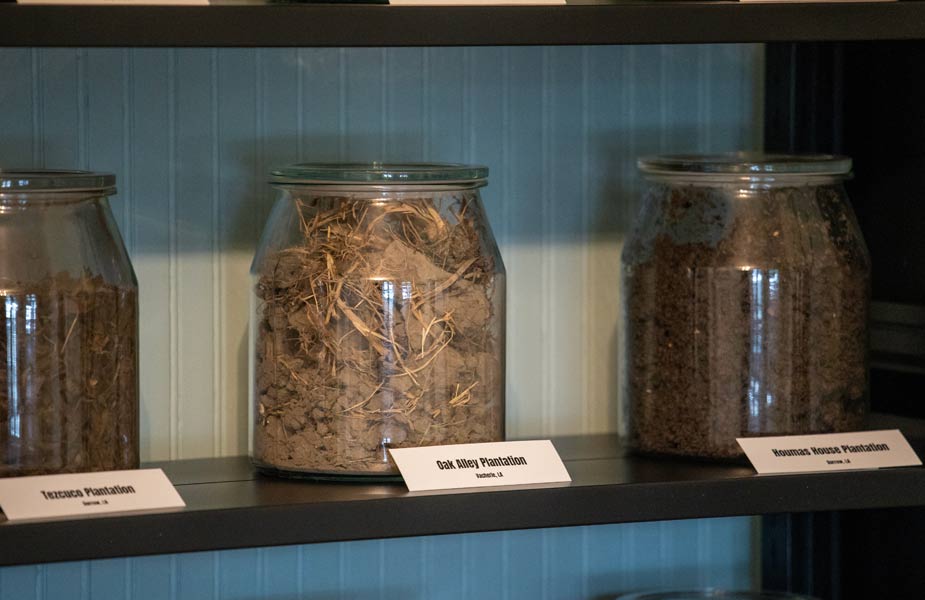
- Close-up image of SOIL, an installation by artist and curator, Shana M. griffin
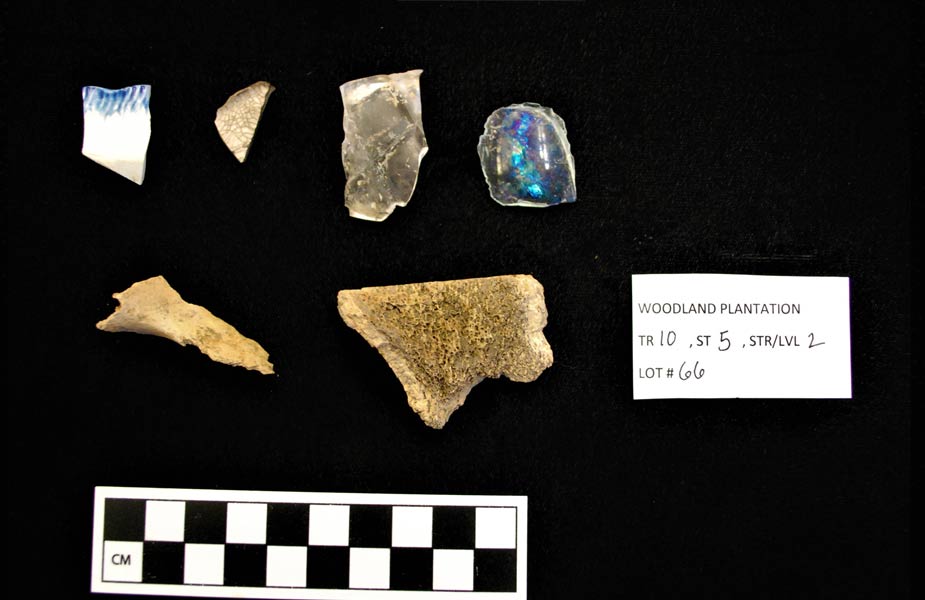
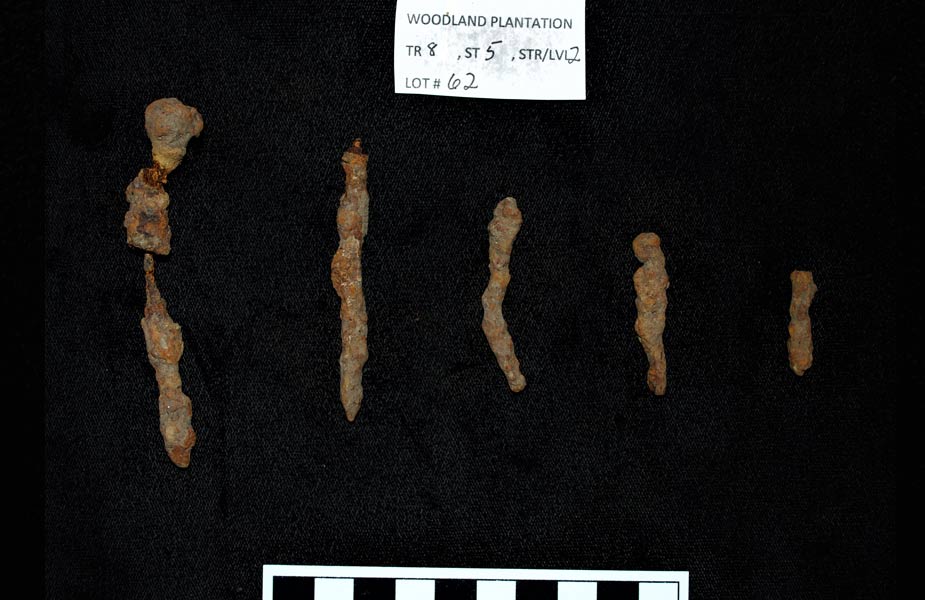
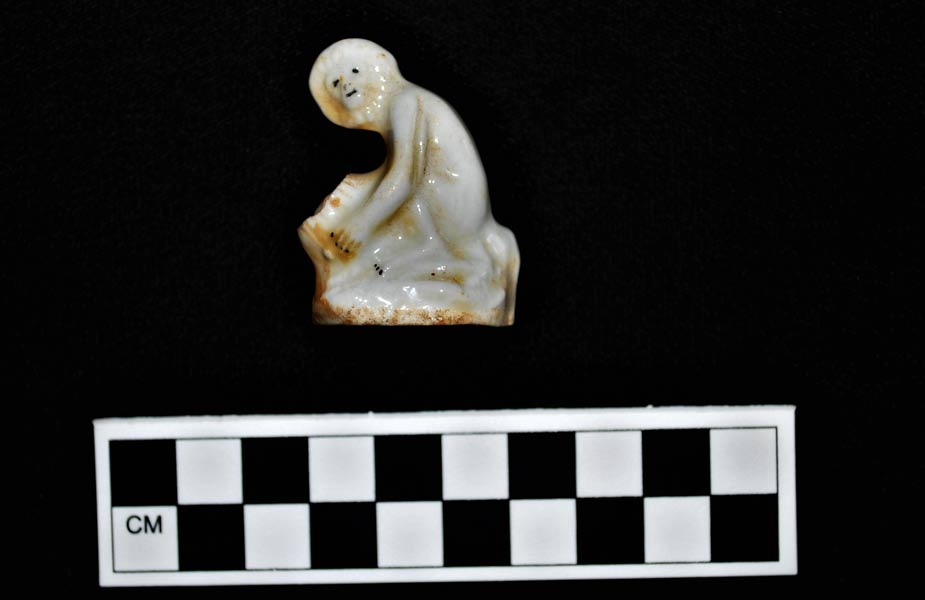
SOIL is a cartographic exercise in Black feminist geographic thought, documenting the violent subjugation and dispossession of Black bodies on former and current sugarcane plantations lining the East and West Banks of the Mississippi River in southeast Louisiana. Through archival research, soil collection, and photographic documentation spanning fifty-five sites, SOIL traces the carceral spaces of what is left behind in and on the grounds of sugarcane plantations, mapping the forgotten scars of past and present disappearances along the Mississippi River. - Found artifacts from a 2024 archeological excavation at Woodland Plantation Museum & Cultural Center led by Dr. Ryan Gray, Woodland Advisory Board Member, LSU: New Orleans Richard Wallin Boebel Professor of Anthropology and Associate DIrector of Midlo Center for New Orleans Studies
- Found artifacts from a 2024 archeological excavation at Woodland Plantation Museum & Cultural Center led by Dr. Ryan Gray, Woodland Advisory Board Member, LSU: New Orleans Richard Wallin Boebel Professor of Anthropology and Associate DIrector of Midlo Center for New Orleans Studies
- Found artifacts from a 2024 archeological excavation at Woodland Plantation Museum & Cultural Center led by Dr. Ryan Gray, Woodland Advisory Board Member, LSU: New Orleans Richard Wallin Boebel Professor of Anthropology and Associate DIrector of Midlo Center for New Orleans Studies
Your Support
Woodland Plantation Museum & Cultural Center in LaPlace, Louisiana, 30 minutes from New Orleans, along the Mississippi River in Louisiana’s River Parishes
Sponsors & Partners
Much gratitude to those who walk with us