Woodland Plantation Museum & Cultural Center
Woodland Plantation Museum and Cultural Center spans roughly 5.5 acres. This includes the original 3.61-acre property purchased by The Descendants Project in 2024, along with an adjacent parcel acquired in 2025 that now serves as the museum’s administrative building.
When the plantation was first established around 1793, it stretched 40 arpents along the Mississippi River. For much of the nineteenth century, the property measured about 14 arpents wide by 80 arpents deep, or roughly 2,000 acres. In 1923, much of that land was subdivided and sold, helping shape the growth of present-day LaPlace.
Historically, Woodland was a sugar plantation, part of the system of slavery and land-based wealth that defined the River Parishes. The earliest documented owner associated with the house is Colonel Manuel Andry, who likely built its original core around 1793. Over time, the
property passed through several families, including François Norbert Boudousquié, the Hollingsworths, and later the Orys. The Ory family’s connection to the site is especially significant, as Woodland is closely linked to the early life of jazz pioneer Kid Ory.
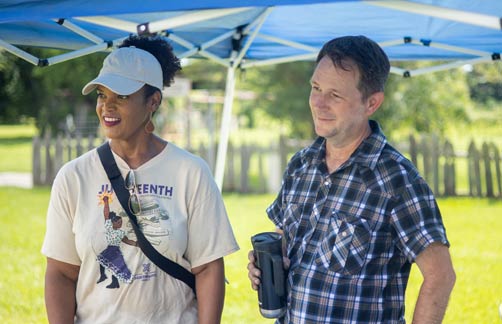
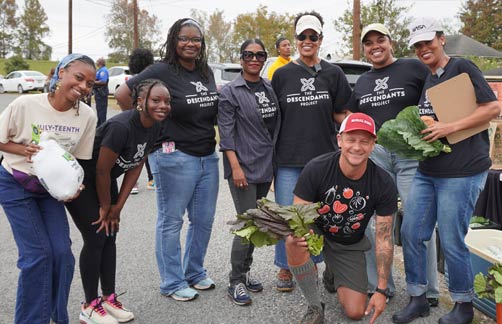
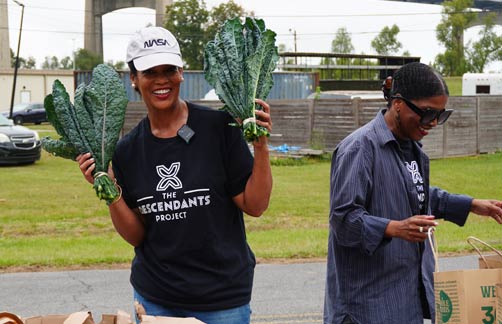
The People behind the Projects
The Mpatapo Knot
Mpatapo, the knot of reconciliation, is an Adinkra symbol of peacemaking, forgiveness, and restored relation after conflict. We chose it as our logo because Woodland is a site shaped by rupture, memory, and endurance. At this museum, we do not turn away from difficult histories. We hold them carefully, truthfully, and in community. The knot reminds us that repair is not simple and reconciliation is not forgetting. It is the ongoing work of binding memory to place, past to present, and people to one another in the pursuit of justice, care, and collective possibility.
The knot is not neat and sentimental. It is interwoven and continuous. It is not a straight line. It holds tension. It acknowledges entanglement. It says that repair is difficult, deliberate work. This is representative of how Woodland interprets and braids its themes. We hold difficult histories truthfully while making room for relation, reckoning, and collective becoming.
- 1811 German Coast Uprising: it signifies the refusal to let the history remain severed from public memory.
- Kid Ory:, it suggests that cultural endurance, improvisation, and the ways Black artistic life carries memory forward even through rupture.
- Plantation-to-Petrochemical Pipeline: it becomes a sign that past and present are bound together, and that justice requires confronting those ties rather than pretending they are separate.

3 Interwoven Stories
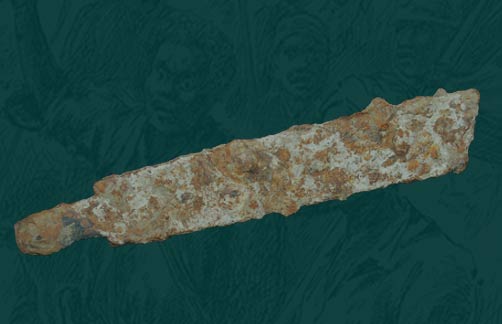
1811 German Coast Uprising
the 1811 German Coast Uprising began on January 8, 1811. It was the largest enslaved revolt in American history.
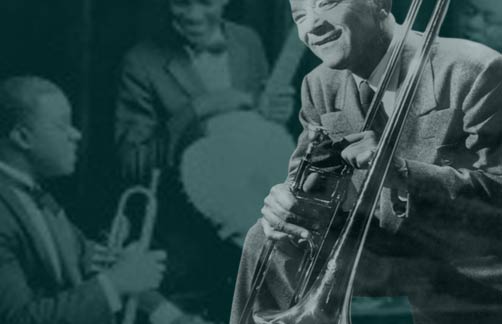
The Legacy of Kid Ory
The birthplace of Edward “Kid” Ory (December 25, 1886), a jazz pioneer whose trombone helped shape the sound we now recognize as New Orleans jazz.
pioneer of New Orleans jazz.

Plantation-to-Petrochemical
the Mississippi River petrochemical corridor, has produced profound environmental and public health burdens for nearby communities.